WoRMS taxon details
Asteromphalus heptactis (Brébisson) Ralfs, 1861
162258 (urn:lsid:marinespecies.org:taxname:162258)
accepted
Species
Asterolampra heptactis (Brébisson) Greville, 1860 · uncertain > unassessed
Spatangidium heptactis Brébisson, 1857 · alternative representation
marine, fresh, terrestrial
(of Spatangidium heptactis Brébisson, 1857) Brébisson, A. de (1857). Refermant la description de quelques nouvelles Diatomées observées dans le Guano de Pérou, et formant genre Spatangidium. Bulletin de la Société Linnéenne de Normandie, 1st series, Caen, 2: 292-298, pl. III
page(s): p. 296; pl. 3, fig. 2 [details]
page(s): p. 296; pl. 3, fig. 2 [details]
Kociolek, J.P.; Blanco, S.; Coste, M.; Ector, L.; Liu, Y.; Karthick, B.; Kulikovskiy, M.; Lundholm, N.; Ludwig, T.; Potapova, M.; Rimet, F.; Sabbe, K.; Sala, S.; Sar, E.; Taylor, J.; Van de Vijver, B.; Wetzel, C.E.; Williams, D.M.; Witkowski, A.; Witkowski, J. (2025). DiatomBase. Asteromphalus heptactis (Brébisson) Ralfs, 1861. Accessed through: World Register of Marine Species at: https://www.marinespecies.org/aphia.php?p=taxdetails&id=162258 on 2025-07-12
Date
action
by
2018-01-31 09:33:29Z
changed
db_admin
2018-02-01 09:09:54Z
changed
db_admin
 The webpage text is licensed under a Creative Commons
Attribution 4.0 License
The webpage text is licensed under a Creative Commons
Attribution 4.0 License
Nomenclature
original description
(of Spatangidium heptactis Brébisson, 1857) Brébisson, A. de (1857). Refermant la description de quelques nouvelles Diatomées observées dans le Guano de Pérou, et formant genre Spatangidium. Bulletin de la Société Linnéenne de Normandie, 1st series, Caen, 2: 292-298, pl. III
page(s): p. 296; pl. 3, fig. 2 [details]
basis of record Hartley, B., Ross, R. & Williams, D.M. (1986). A check-list of the freshwater, brackish and marine diatoms of the British Isles and adjoining coastal waters. <em>Journal of the Marine Biological Association of the United Kingdom.</em> 66(3): 531-610. [details] Available for editors [request]
new combination reference Pritchard, A. (1861). A history of infusoria, living and fossil: arranged according to Die infusionsthierchen of C.G. Ehrenberg; containing colored engravings, illustrative of all the genera, and descriptions of all the species in that work, with several new ones; to which is appended an account of those recently discovered in the chalk formations. xii. Edition IV, revised and enlarged by J.T. Arlidge, W. Archer, J. Ralfs, W.C. Williamson and the author. London, Whittaker and Co., 1861., xiii + 968 pp., 40 pls.
page(s): p. 838; pl. 8, fig. 21 [details]
page(s): p. 296; pl. 3, fig. 2 [details]
basis of record Hartley, B., Ross, R. & Williams, D.M. (1986). A check-list of the freshwater, brackish and marine diatoms of the British Isles and adjoining coastal waters. <em>Journal of the Marine Biological Association of the United Kingdom.</em> 66(3): 531-610. [details] Available for editors
[request]new combination reference Pritchard, A. (1861). A history of infusoria, living and fossil: arranged according to Die infusionsthierchen of C.G. Ehrenberg; containing colored engravings, illustrative of all the genera, and descriptions of all the species in that work, with several new ones; to which is appended an account of those recently discovered in the chalk formations. xii. Edition IV, revised and enlarged by J.T. Arlidge, W. Archer, J. Ralfs, W.C. Williamson and the author. London, Whittaker and Co., 1861., xiii + 968 pp., 40 pls.
page(s): p. 838; pl. 8, fig. 21 [details]
Other
additional source
Tomas, C.R. (Ed.). (1997). Identifying marine phytoplankton. Academic Press: San Diego, CA [etc.] (USA). ISBN 0-12-693018-X. XV, 858 pp., available online at http://www.sciencedirect.com/science/book/9780126930184 [details]
additional source Scott, F.J.; Marchant, H.J. (Ed.). (2005). Antarctic marine protists. <em>Australian Biological Resources Study: Canberra.</em> ISBN 0-642-56835-9. 563 pp., available online at http://its-db.aad.gov.au/proms/pubn/pubshow.asp?pub_id=12140 [details]
additional source Fourtanier, E. & Kociolek, J. P. (compilers). (2011). Catalogue of Diatom Names. California Academy of Sciences, On-line Version. Updated 2011-09-19., available online at http://researcharchive.calacademy.org/research/diatoms/names/index.asp [details]
additional source Krayesky, D. M.; Meave, D. C.; Zamudio, E.; Norris, E.; Fredericq, S.; Tunnell, J. (2009). Diatoms (Bacillariophyta) of the Gulf of Mexico. <em>Gulf of Mexico origin, waters, and biota.</em> 1: 155-186. [details] Available for editors [request]
additional source Liu, J.Y. [Ruiyu] (ed.). (2008). Checklist of marine biota of China seas. <em>China Science Press.</em> 1267 pp. (look up in IMIS) [details] Available for editors [request]
additional source Harper, M.A.; Cassie Cooper, V.; Chang, F.H.; Nelson, W.A.; Broady, P.A. (2012). Phylum Ochrophyta: brown and golden-brown algae, diatoms, silicoflagellates, and kin, in: Gordon, D.P. (Ed.) (2012). New Zealand inventory of biodiversity: 3. Kingdoms Bacteria, Protozoa, Chromista, Plantae, Fungi. pp. 114-163. [details]
additional source Scott, F.J.; Marchant, H.J. (Ed.). (2005). Antarctic marine protists. <em>Australian Biological Resources Study: Canberra.</em> ISBN 0-642-56835-9. 563 pp., available online at http://its-db.aad.gov.au/proms/pubn/pubshow.asp?pub_id=12140 [details]
additional source Fourtanier, E. & Kociolek, J. P. (compilers). (2011). Catalogue of Diatom Names. California Academy of Sciences, On-line Version. Updated 2011-09-19., available online at http://researcharchive.calacademy.org/research/diatoms/names/index.asp [details]
additional source Krayesky, D. M.; Meave, D. C.; Zamudio, E.; Norris, E.; Fredericq, S.; Tunnell, J. (2009). Diatoms (Bacillariophyta) of the Gulf of Mexico. <em>Gulf of Mexico origin, waters, and biota.</em> 1: 155-186. [details] Available for editors
[request]additional source Liu, J.Y. [Ruiyu] (ed.). (2008). Checklist of marine biota of China seas. <em>China Science Press.</em> 1267 pp. (look up in IMIS) [details] Available for editors
[request]additional source Harper, M.A.; Cassie Cooper, V.; Chang, F.H.; Nelson, W.A.; Broady, P.A. (2012). Phylum Ochrophyta: brown and golden-brown algae, diatoms, silicoflagellates, and kin, in: Gordon, D.P. (Ed.) (2012). New Zealand inventory of biodiversity: 3. Kingdoms Bacteria, Protozoa, Chromista, Plantae, Fungi. pp. 114-163. [details]
 Present Present in aphia/obis/gbif/idigbio Inaccurate Introduced: alien Containing type locality

To Biodiversity Heritage Library (10 publications) (from synonym Spatangidium heptactis Brébisson, 1857)
To Biodiversity Heritage Library (44 publications)
To Biodiversity Heritage Library (7 publications) (from synonym Asterolampra heptactis (Brébisson) Greville, 1860)
To Catalogue of Diatom Names (CAS) (from synonym Asterolampra heptactis (Brébisson) Greville, 1860)
To Catalogue of Diatom Names (CAS) (from synonym Spatangidium heptactis Brébisson, 1857)
To Catalogue of Diatom Names (CAS)
To Dyntaxa
To NHMUK collection (Asterolampra heptactis (Bréb.) Grev.; NHMUK:ecatalogue:4736353) (from synonym Asterolampra heptactis (Brébisson) Greville, 1860)
To PESI
To ITIS
To Biodiversity Heritage Library (44 publications)
To Biodiversity Heritage Library (7 publications) (from synonym Asterolampra heptactis (Brébisson) Greville, 1860)
To Catalogue of Diatom Names (CAS) (from synonym Asterolampra heptactis (Brébisson) Greville, 1860)
To Catalogue of Diatom Names (CAS) (from synonym Spatangidium heptactis Brébisson, 1857)
To Catalogue of Diatom Names (CAS)
To Dyntaxa
To NHMUK collection (Asterolampra heptactis (Bréb.) Grev.; NHMUK:ecatalogue:4736353) (from synonym Asterolampra heptactis (Brébisson) Greville, 1860)
To PESI
To ITIS
Unreviewed
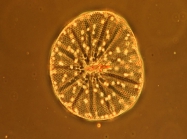
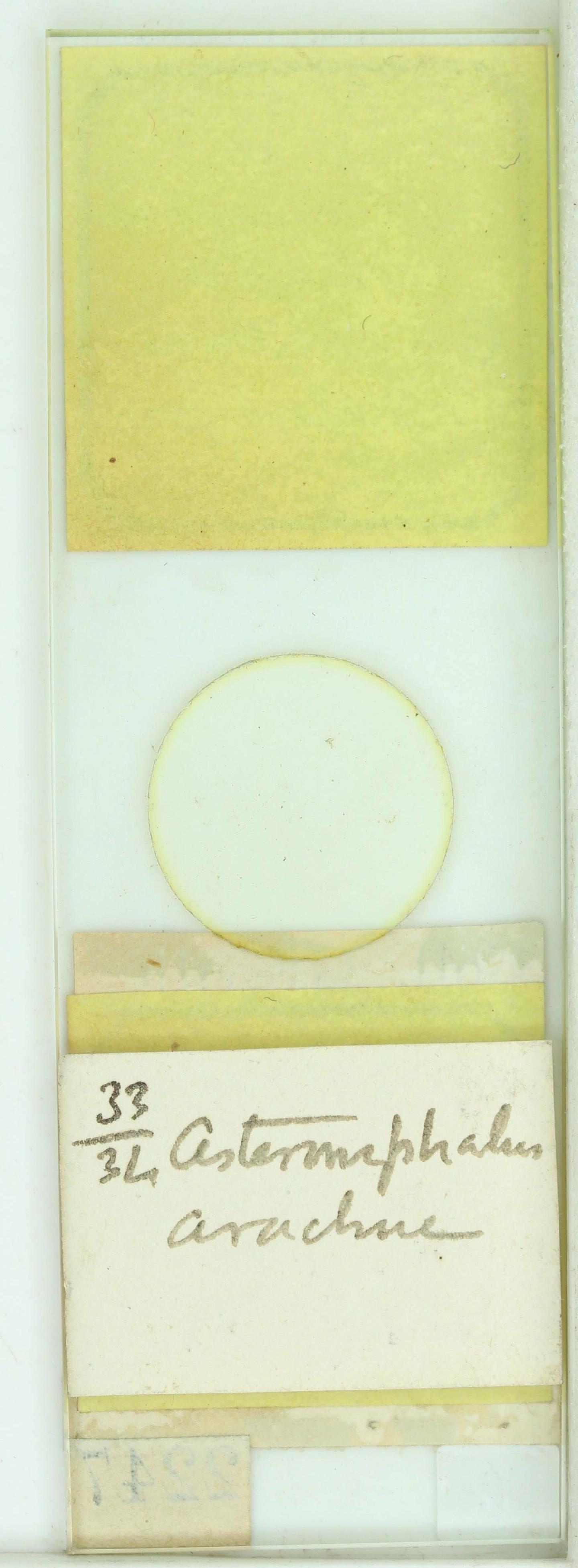
Hosted externally, from synonym
